The late Sir Christopher Lee narrates a series of four half-hour ghost stories by M.R. James. Originally shown on BBC2 during the last week of December, 2000.
Robert Powell narrates a series of five partially-dramatised ghost stories by M.R. James. Originally shown on BBC2 during the last week of December, 1986, they included "The Mezzotint", "The Ash-Tree", "The Rose Garden", "Wailing Well", and "Oh, Whistle, and I'll Come to You, My Lad".
After the semi-dramatic M.R. James adaptations read by Robert Powell, the BBC also produced a short series of further readings in 2000 featuring Christopher Lee as James: "The Stalls of Barchester Cathedral", "The Ash Tree", "Number 13" and "A Warning to the Curious".
All of these "M.R. James' Ghost Stories for Christmas" have been included in the new BFI boxset, but there are two available as a taster on YouTube. Enjoy!
Number 13
A Warning to the Curious
I'm sure you're sick to death of M.R. James now. Don't worry, I have something different for you tomorrow.
Continuing the "Ghost Stories for Christmas", do you remember the half-way house provided by BBC2 which almost made up for the discontinued annual supernatural dramas?
In December 1986, BBC2 broadcast partially dramatised readings by Robert Powell of "The Mezzotint", "The Ash-Tree", "Wailing Well", "Oh, Whistle, and I'll Come to You, My Lad" and "The Rose Garden".
I looked forward to watching these after school in the weeks before the Christmas holiday, but I vaguely remember that they weren't shown consecutively. I think that two episodes were shown one week and three the next which caused me to miss at least one of them. I'm also sure that one was broadcast on a Saturday or Sunday afternoon and I only caught the very end of it.
Although they've never been repeated or made available to buy on VHS or DVD (as far as I know), these readings have been kept in circulation on YouTube for years. Unfortunately, they were all uploaded in sections rather than entire episodes (short as they are anyway) so you'll just have to click the related videos links at the end of each one to see the next part.
For the last two years I've been hearing about Mark Gatiss from British horror fans who have been singing his praises as if he's the new "ace face" of horror. Having been very disappointed by "Crooked House" (2008), I was pretty much determined to hate the writer/actor responsible for that awfulness for all eternity.
I got the impression that Mark Gatiss was yet another of these so-called "horror experts" who the BBC likes to wheel onto every show that mentions the genre. In the '80s, we had the real big names of horror such as Christopher Lee, Peter Cushing, Donald Pleasence, and Clive Barker doing the chat show rounds, but something went horribly wrong in the '90s. When the BBC (and others) started forcing the John McCririck lookalike Kim Newman onto an unsuspecting public, it was time to either stop watching horror documentaries or kick the TV screen in to save yourself from dying by tweed suit overload and grinnygog-itis.
I don't really know where Kim Newman came from or how he ended up as the worst example of hairy-faced, British horror convention nerds. All I can say is that I bought his "Anno Dracula" novel and threw it away in disgust after only reading 4 pages. Horror fan or not, something about Kim Newman creeps me out and not in a good way. I couldn't concentrate on a single thing he said in interviews because I just wanted to punch the smug, self-satisfied smile right off his face. No, more than that, I wanted to see him get a damn good kicking live on TV.
Thus, I assumed that the BBC's "A History of Horror with Mark Gatiss" was going to more of the same superficial crap presented by another constantly grinning weirdie-beardie who I wouldn't like. I was wrong.
Although I can't say that Mark Gatiss has quite the same taste in movies as me, he comes across as a genuine fan and has the good sense to add the following disclaimer over a shot of his horror DVD collection:
"Because horror is such a personal passion of mine, this series will be unashamedly selective. I'm going to build my account around my favourite films and periods."
I can't argue with that at all. It's exactly what I do on my blog, and it's what you should be doing on yours. While there are universals which objectively qualify whether one movie is good and another is bad, horror is mostly a very subjective experience.
As a documentary, there are some parts of "A History of Horror" which are weaker than others, no new information for the hardcore horror fan, but enough personally British stuff to allow those of us of the same age as Mark Gatiss to reminisce alongside him. It may not be the final say in horror documentaries, but it's more than just a primer for the casual movie-goer.
I too watched the same Hammer, Amicus and Universal horror movies on TV as Mark Gatiss did, I bought the same books and magazines, and I've met nearly all the same people at various conventions whom he interviewed. I haven't met John Carpenter, but I don't really want to. The documentary is Mark Gatiss' personal journey through great horror and shouldn't be seen as something shared by every horror aficionado. We all have different tastes and levels of interest within the genre. There are some younger horror fans who would have no idea who any of the stars he spoke to even are.
And so I sat through the three episodes of "A History of Horror" not really learning anything but still enjoying Mark Gatiss' obvious love of the genre. Owing to his sexuality, there are a couple of older movies which mean more to Mark Gatiss than they do to me, but he doesn't make a big deal out of them for that reason. For instance, he doesn't shove the gay stuff from "The Bride of Frankenstein" down everyone's throats, and I'm not even going to add the obligatory cheap joke about "even if he wants to" because he doesn't seem like that kind of chap at all. He sometimes dwells too long on what interests him rather than on why it interests him, but hopefully we already share the unspoken appreciation.
Mark Gatiss does repeatedly emphasise that he's from the North of England which is slightly alienating for a Southerner. Mark Gatiss doesn't have a broad Manchester accent so, if he hadn't said anything, I doubt that I would even have noticed where he came from. It still conjures up an image of no-nonsense, flat cap-wearing and whippet-walking Northerners who must have made him feel like quite an outsider at times. Give or take the regional differences, surely every horror fan feels a little bit different to the "normal" people though, don't they?
Mark Gatiss doesn't push the question of what it means to be a horror fan. It might have been more interesting if he had done, but then it would have been a documentary all about him rather than the movies he enjoys. I have to give him credit for not making everything Mark Gatiss-centric or playing the attention whore except when it was absolutely necessary. "A History of Horror" is no "Look at me, I'm Mark Gatiss!" vehicle.
Can you imagine Kim Newman in his attention-grabbing three-piece suits doing the same thing? Exactly. It would have caused broken TV screens across the country and a torch-bearing lynch mob descending into his parent's basement.
Mark Gatiss succeeded where so many horror documentary makers failed. He made his journey personal without it being about him. He made "A History of Horror" something to share rather than reflect one individual's tastes.
After "A History of Horror", I also watched the follow-up, "Horror Europa", which is more of the same only less so. "Horror Europa" is a continuation rather than a separate documentary which fills in a few more details about European horror in the same golden ages as were mentioned before. Again, Mark Gatiss is merely the amiable strand who ties the interviews together, but he has the balance right.
I didn't expect to like Mark Gatiss. I thought that I'd either be jealous of his success or annoyed by the ramblings of another "no-talent-know-all". Apart from "Crooked House", I don't actually remember seeing him in anything else before these documentaries. I'm not a comedy fan or Sherlock Holmes buff (outside of Basil Rathbone and Nigel Bruce) so no great surprise there. I'm a bit of a purist, so if it's not horror, I probably haven't seen it.
I have no idea what Mark Gatiss is like as a actor or a person, but as a presenter, he's found his niche. If there is anyone worthy to represent British horror at the present time, it's definitely Mark Gatiss.
The more recent BBC "Ghost Stories for Christmas" haven't been as good as the originals. Maybe it's a case of rose-tinted spectacles, but they all seem rather soulless in comparison.
A View from a Hill (2005)
"A historian has a disturbing experience after borrowing a pair of binoculars belonging to a missing outcast and venturing up a notorious landmark."
Number 13 (2006)
"An academic researcher repudiates local superstitions surrounding a devilish house. However, repeated visions and noises during the night suggest he may be proved wrong."
The Turn of the Screw (2009)
"A governess, incarcerated in a mental asylum, tells a doctor of the possession of her two pupils by a former governess and her lover."
You'll notice that I haven't mentioned the 1968 version of "Whistle and I'll Come to You" starring Michael Hordern. Although it's included in the new BFI boxset - Ghost Stories for Christmas - The Definitive Collection - "Whistle and I'll Come to You" was a precursor to the BBC's true "Ghost Stories for Christmas" and was really part of the Omnibus series of dramas instead.
More nostalgia from the golden age of British TV horror. Watch them while you can!
As you will see, the quality of these dramas peaked then dropped significantly in later years until the BBC gave up on the idea.
The Signalman (1976)
"A railway signalman tells a curious traveller how he is being troubled by a ghostly spectre that seems to predict calamity."
Stigma (1977)
"After a young couple move into a remote country house in the middle of a stone circle, workmen disturb an ancient menhir, unleashing a supernatural force."
The Ice House (1978)
"Residents at a health spa begin to suspect a strange flower growing in an old ice house in the grounds may be the cause of a series of misfortunes."
Schalcken the Painter (1979)
"Schalcken the painter sees his one true love, Rose, wedded by contract for a sum of money to a man who may or may not be a demon. When she escapes and returns home, she is pursued by her demon lover."
Casting the Runes (1979) - a bonus from ITV
"After a television series lampoons a famous demonologist, its producer and cast soon find themselves threatened by mysterious, malevolent forces."
Tomorrow, I'll post the final "Ghost Stories for Christmas" which the BBC vainly tried to revive as a series in the mid 2000s.
I've talked about them a lot on this blog so here's your chance to enjoy some of the most terrifying ghost stories ever shown on TV.
Break out the Harvey's Bristol Cream, Twiglets and cheesy footballs with earwax in the middle, and prepare to soil yourself all over again!
The Stalls of Barchester (1971)
"An ambitious cleric murders an aged Archdeacon at Barchester Cathedral. However, he is soon being stalked by a sinister black cat and by a hooded figure both of whom seem to be embodiments of carvings on the cathedral's choir stalls."
A Warning to the Curious (1972)
"An amateur archaeologist travels to a remote seaside town in Norfolk to search for the lost crown of Anglia, but after unearthing it is haunted by a mysterious black figure."
Lost Hearts (1973)
"An orphan moves into the house of his uncle, but is disturbed by visions of a pair of ghostly children. Is their message a warning to be fearful of his uncle's obsession with immortality?"
The Treasure of Abbot Thomas (1974)
"A respected theologian and his protégé unearth clues to find the hidden treasure of a disgraced monk in an abbey library. Should he have heeded his own advice not to go treasure hunting?"
The Ash Tree (1975)
"An aristocrat inherits his family estate and is haunted by visions of his ancestor's role in a witchcraft trial."
"A year after their son goes missing, a family moves to Crickley Hall. When supernatural events begin to take place, Eve feels the house is somehow connected to her lost son."
It's been so long since I read James Herbert's 2006 novel which the BBC adapted for this lacklustre Hallowe'en TV offering that I almost forgot what a derivative crock of shit it was. I'm not going to say that Herbie plagiarised "The Devil's Backbone" (2001), but he was clearly influenced by it before "Britishing-up" the story. If he says otherwise, I'll find it very difficult to believe him. It wouldn't be the first time that James Herbert sailed too close to the wind as his famous lawsuit over "The Spear" will confirm. His "Sepulchre" is hardly a million miles away from Clive Barker's "The Damnation Game" as far I remember either.
In fairness, the classic "ghost story with children in it" pattern goes back even before "The Haunting" (1963) or "The Innocents" (1961); both of which have influenced every ghost story ever since. With so many supernatural movies in such a short space of time including "The Others" (2001), "Saint Ange" (2004), "Fragile" (2005), "The Orphanage" (2007), the TV series "Marchlands" (2011), and the even more recent "The Awakening" (2011), it's pretty obvious that there would be some similarities.
Given the basic premise, I'd be foolish not to throw in "The Dark" (2005) and "Half Light" (2006) as more of the same unimaginative cloning from the last decade although "The Haunting of Julia" (1977) and "The Changeling" (1981) also dealt with the "bereavement and haunting" formula long before them. There's just nothing new when it comes to ghost stories.
If you look further into the "six degrees of separation" style connections around "The Secret of Crickley Hall" as a TV miniseries, it's far more amusing where they lead. Director Joe Ahearne is most famous for "This Life" which I'm sure I've mentioned on this blog before as being the series which gave Andrew Lincoln of "The Walking Dead" fame his big break. In between the two, Andrew Lincoln was in "Afterlife" (2006) where he played a bereaved father who had lost his son and teamed up with a psychic played by Lesley Sharp. That series was written by Stephen Volk who wrote "The Awakening" (2011). Although there's no real connection, Lesley Sharp was in an episode of "Doctor Who" and so was Tom Ellis who stars in "The Secret of Crickley Hall". They weren't in the same episode or even the episodes of "Doctor Who" which were written by Joe Ahearne, but you can still smell the BBC nepotism a mile away.
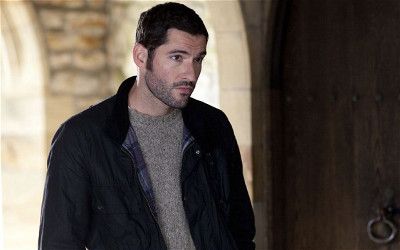
Tom Ellis as Gabe.
Just to complicate matters even more, James Herbert's "Haunted" was originally a screenplay which was rejected as a BBC miniseries, Stephen Volk wrote the BBC's infamous "Ghostwatch" (1992), and Lesley Sharp recently appeared in "Whistle and I'll Come to You" (2010) - another BBC ghost story. If you also look at Tom Ellis' list of acting credits on the IMDb, he's a definite BBC regular and also appeared in "The Fades" - the axed supernatural drama from 2010. It doesn't take a genius to work out that all these people know each other or of each other to some extent. How many generic ghost stories were passed between the writers and the decision makers at the BBC is another matter though. There are too many coincidences for there not to be some collusion along the way. And people say that Hollywood is shady!
Conspiracy theories aside, it will always look like Herbert copied Volk who then copied Herbert back before Ahearne was brought into the shenanigans. The rivalry and borrowing by all three writers is probably more noticeable than any of them realise themselves.
After all this rambling, the main problem with "The Secret of Crickley Hall" is that it's an overlong story which can be condensed into one or two sentences. Basically, there's a wartime orphanage/home for evacuees where the sadistic governor kills a little boy by circumcising him so severely that he cuts his pecker off in the process. The governor covers up the crime during a flood and ends up as a ghost along with all the children he abused. In the present day, a family whose son was kidnapped a year ago go to live in the former orphanage, and all the ghosties get riled up to solve two mysteries in one.
Give or take a couple of even more sordid details, that's "The Secret of Crickley Hall" in a nutshell (pardon the pun). Indeed, it could be retitled, "The Legend of the Mutilated Peepee" since that's the big secret. I don't care that this is a spoiler because I can pretty much guarantee that you won't see the little "Jewish" boy get mutilated or "The Secret of Crickley Hall" turn into "The Jew Who Bled To Death". Oh, no, the politically correct BBC won't dare risk upsetting anybody with that. The last time they were brave enough to be controversial in a drama was when Dennis Potter was still alive. Curiously, they don't seem to care about overpaid Jonathan Ross or Jeremy Clarkson flapping their insulting gums though.
As a miniseries, "The Secret of Crickley Hall" tones down the really disgusting stuff to such an extent that the barebones story is boring beyond belief. The book was short of scares anyway, but the brutality, paedophilia and incest which covered its weaknesses are scarcely touched upon in this pussified TV adaptation. I remember when the BBC used to have more balls. Honestly, "The Secret of Crickley Hall" makes me ashamed to be a British horror fan. What the Hell has happened to Britain since I've been away? What happened to all the gritty dramas?
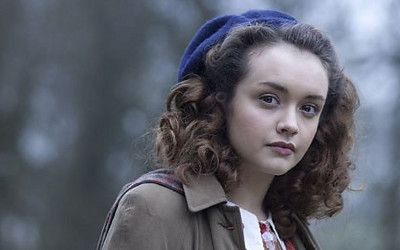
Olivia Cooke as Nancy.
The characters in "The Secret of Crickley Hall" are merely stereotypical ciphers to move on the uninspired plot anyway, but the deadpan delivery of the actors in this miniseries is reprehensible. Olivia Cooke is the worst culprit. Although she's very pretty, and looks young enough to be in the orphanage as one of the orphans rather than their teacher, her monotone voice can't be disguised by cutely letting one glycerine tear run down her cheek. Could she act as if she cared even less? Can she act though? Probably not since she has to be all of 16 years old.
As for Tom Ellis (a.k.a. Dr Oliver from "Eastenders"), he's a little bit better as the sceptical Gabe Caleigh even though his taste in women must have gone on the wonk for him to end up with Suranne Jones (the mouthy one from "Coronation Street") as his onscreen wife. Okay, so a higher power miscast them together, but that's not how those of us with an unwilling suspension of disbelief view such a lack of chemistry or realism. All you want to say is, "He could have done so much better!" At least neither of them has mispronounced the word "us" as "uzzz" yet despite playing Northerners.
There's some bizarre thing about little fingers and a psychic link which makes absolutely no sense either. There doesn't even appear to be anything odd about Suranne Jones' hands in close-up so I have no idea what that's all about. Either it's a poor effect, bad camerawork, something that seemed more important in the script than it really was, or just feeble execution to match every other part of this travesty. It's hard to tell amidst the conflation and censorship. The psychic link homages "The Shining", of course, as does Tom Ellis' bad "Here's Johnny!" impression. I don't think he even tried to do any better. I can't blame him.
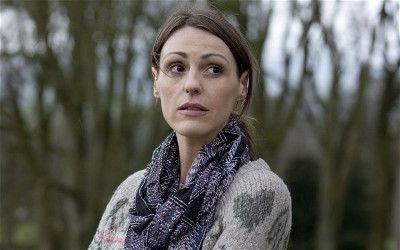
Suranne Jones as Eve.
Poor old David Warner has been wheeled out for this thing too as the old guy who used to be a young guy and knows everything. I've forgotten the name of that trope, but, yes, it's yet another familiar one. It's nice to see David Warner in something again, and he's the best actor in "The Secret of Crickley Hall" anyway. Not to take anything away from Donald Sumpter who has been in absolutely everything over the years, but he's not much cop (pardon another pun since he was in "The Bill") as a paranormal investigator. If he has more than four lines in the final episode, I will be shocked.
It's no surprise that both veteran actors have also been in "Doctor Who" recently. "The Secret of Crickley Hall" could even be "Former Doctor Who Actors Do Ghosties" if you want to be a real bitch about it. I suppose it makes a change from "Eastenders Does Ghosties" which has already been done to death.
I have no idea why the setting was changed from Devon to "oop North" except that occasionally the BBC vainly attempts to make Southerners believe that anywhere above Watford isn't full of Neanderthals who eat their own young. It's probably part of the same equal opportunities nonsense at the BBC which has forced every gay and racial minority actor into "Doctor Who" and "Eastenders" over the years. Yes, all six of them have been assured work by the same hypocritical company which allegedly turned a blind eye to Jimmy Saville interfering with little kids for over 40 years. Following that scandal, no wonder the BBC started to get cold feet about airing "The Secret of Crickley Hall". The ironic reminders in the subject matter are uncomfortably close to home, and there aren't any black or gay characters to redress the balance.
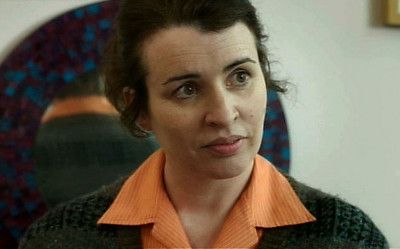
Susan Lynch as Lili.
The BBC missed a golden opportunity to replace the psychic with a Jamaican or Indian, but at least they've stayed truer to the book there. They couldn't use anyone Scottish either without reminding everyone of their stupid decision to axe "Sea of Souls". Knowing that Susan Lynch, who plays Lili Peel, fills the "minority" quotient by being Irish somewhat amused me. I bet someone at some point wanted Lesley Sharp for the role except that would have really given away how similar the present day part of "The Secret of Crickley Hall" is to "Afterlife". I still noticed though.
Since I'm writing this after seeing only two episodes, I can't say if the final one will improve anything. I missed "The Secret of Crickley Hall" when it was shown on BBC America (on October 28th) so I've had to follow the postponed UK schedule. I'm sure that the story won't change that much from the novel unless gay aliens fly in and abduct everybody or something comes out of left field like that. You can never tell what will happen with BBC TV adaptations of horror books as "The Haunted Airman" or any of M.R. James' ghost stories over the years can attest to. If it was a Stephen King adaptation, we would all be waiting for another giant spider so be thankful that this is James Herbert. Herbie just likes to destroy everything at the end so be prepared to see your licence fee wasted on some half-arsed flooding effects or explosions.
With the story taking place in two time periods, the most interesting parts seem to happen in World War II. Whether or not that continues, we will just have to wait and see. "The Secret of Crickley Hall" concludes tomorrow.
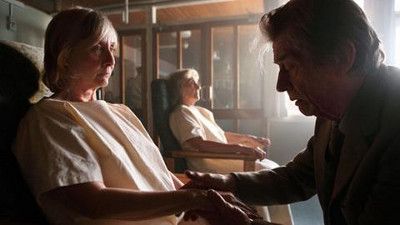
"After placing his ailing wife Alice in a care home elderly academic James Parkin goes to stay at a wintry out-of-season hotel which they used to visit together."
As you can see, I couldn't find a legitimate trailer for the BBC's 2010 remake of their classic 1968 ghost story for Christmas. I also couldn't find any version other than the overpriced Michael Hordern one on Amazon to link to in the affiliate box either so I assume that this still isn't out on DVD anywhere yet. Since it was little more than a TV show rather than a movie, I don't expect it will ever be on DVD on its own anyway.
I don't often do this, but due to being in America and having missed "Whistle and I'll Come to You" when it was shown on Christmas Eve two years ago, I couldn't stand it any longer and had to watch it online. I've always loved M.R. James' ghost stories and the BBC adaptations of them so missing out on what was potentially another good one had been eating at me ever since I first heard about it.
Unfortunately, despite superb direction by Andy De Emmony, this more modern adaption was virtually a rewrite of M.R. James in a bad way. Although Neil Cross retained the core components of M.R. James' short story in his screenplay, he lost all of the legends and most of the mystery which made the original so good. It didn't even have a whistle in it!
Watching this on my own at three o'clock in the morning with the lights off, I was still genuinely creeped out by the whole thing, but not entirely for the reasons anyone intended. Suffice it to say that during the hour when statistics say that most people die, I started thinking about a lot of things which I shouldn't.
Seeing Gemma Jones (who you might know as Madam Pomfrey from the "Harry Potter" movies) playing the part of an old woman with dementia reminded me of how my grandmother ended up. The old people's home (or whatever politically correct term is in vogue now), reminded me a lot of the horrible asylum which I saw my grandmother get put in only a few months before she died. All the people sat facing each other in silence with one or two or them occasionally crying out was some kind of Hell for sure. I hope I never end up like that.
Maybe it wouldn't be so bad if I also had Lesley Sharp as my carer since I've found her strangely attractive ever since I first saw her in ITV's "Afterlife" series. For those of you who are unfamiliar with it, that show also gave Andrew Lincoln from "The Walking Dead" another big career boost after his stint in "Teachers" and "This Life". I was actually quite surprised at how warm and toned-down Lesley Sharp was in "Whistle and I'll Come to You" as she couldn't act very well at all in "Afterlife". She only delivered one line during a telephone conversation badly, but even that was down to the script rather than her ability.
The other notable actress in this who I racked my brain trying to place was Sophie Thompson. Although she was also in a "Harry Potter" movie, she is much more famous for playing the quite unbalanced Stella in "Eastenders". Maybe it's my age, but I thought she was very pretty from certain angles too. Her character came across as quite nice but a little bit dim which is always endearing.
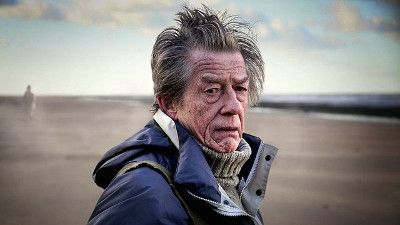
John Hurt turned in a routine performance as James Parkin, but even at his worst John Hurt always eclipses other actors who are trying their hardest. The man has always had a natural talent and charisma which transcended his looks and, of course, his voice is legendary.
Having said that, I didn't really like his character all that much, and the "haunting" (whether triggered by guilt or having a far more supernatural purpose) turned him into a jelly far quicker that his scientific background should have allowed. One scene was so blatantly borrowed from "Poltergeist" that the result made him look quite childish. Given the two adaptations, I think I still prefer Michael Hordern's version of the same character.
The sparseness of any incidental music, which left the soundtrack comprised of only natural sounds such as seagulls and wind effects, made "Whistle and I'll Come to You" eerier than it could have been. That silence contributed a lot to the isolated feeling and emptiness of the beach scenes in particular.
I was a little bit baffled as to why they chose Kent instead of the usual Norfolk Broads for the location, but it still worked in spite of the electricity-generating windmills. I supposed that the contrast between the new and the old was there to continually highlight that John Hurt's character was coming to the end of his time just like his wife. If that was the reason, it was messily done as both the hotel and its receptionist still looked like they belonged in the 1940s Give or take a couple of clocks from the '70s and John Hurt's very modern anorak, the story might have worked a lot better as a period piece, but, apparently, nobody wanted to retread the same ground as the previous M.R. James adaptations.
Anyway, "Whistle and I'll Come to You" wasn't a total disaster, but it was disappointing in its failure to stay true to the original story. I didn't expect it to be quite as short as it was either and had assumed that it was going to have the ninety-minute length of a movie rather than be a measly fifty-minute TV episode with a new ending.
If you feel like tracking this down online, its still worth a watch, but you'd be better off reading the original story instead.
One of the things which I'm sure people wonder about is where I got the name for my blog from.
When my movie reviewing career started out as a column in a vampire magazine back in 1994, it was just the first thing that popped into my head based on "blood" and "vaults" which I associate with vampires for some reason. I would have called it "Dr Blood's Coffin" except that it was already the title of a 1961 Frankenstein subgenre horror film which had nothing to do with vampires at all.
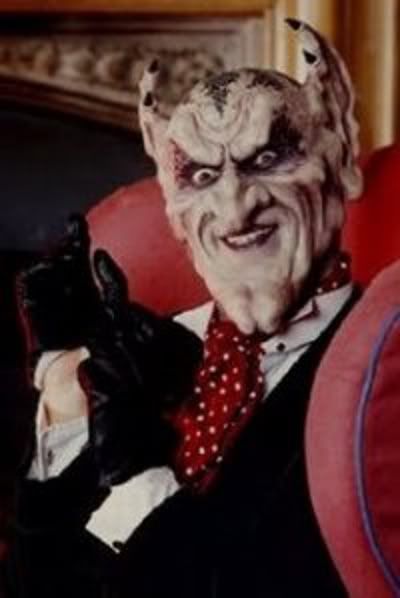
In 1992, however, there was also this guy, Dr Walpurgis, who introduced BBC2's Hallowe'en night spectacular after everyone had either been traumatised or bored to death by the Screen One mockumentary drama, "Ghostwatch", over on BBC1.
Nobody thought they'd ever hear anything more of this character until he turned up again a couple of years later as "Dr Terror", the host of many BBC1 horror double-features. I absolutely loved the selection and put my video recorder to good use on Friday nights by taping every single one of them. I even went as far as designing special VHS sleeves with his big evil face on them to house my collection and I did it all without any of the benefits of modern desktop publishing too. I used to clip the film listings out of the Radio Times, glue them to the back of an already photocopied VHS sleeve and fill in the other details with felt-tipped pens and coloured pencils. They looked quite good too, all lined up on my bookshelves.
The only thing which was somewhat annoying and embarassing for me was that Dr Terror's shows were initially called "The Vault of Horror" and, later, "Dr Terror's Vault of Horror". It was a little bit too close for comfort. I was making a small career for myself in a more literary field and thought that I was being very original especially as my review column appeared at least six months before this new incarnation of Dr Walpurgis.
Ironically, the magazine that I used to write for and "Dr Terror's Vault of Horror" both died out around the same time but I'm still going. Now I can look back on those days with a lot of fondness especially as Dr Terror kick-started my quite fanatical horror movie collecting.
Thank you, Dr Terror, for providing me with more Hammer and Amicus films than I would ever go out of my way to purchase but, most of all, for being Britain's only horror host.
"A ghost story about a cursed house. The cursed house - Geap Manor - weaves together three ghost stories set during Georgian times, the 1920s and the present day."
Because I moved to America back in December 2007, I actually missed this replacement to the BBC "Ghost Stories for Christmas" entirely. Since there was nothing worth watching on BBC America this year other than the "Doctor Who Christmas Special", I found "Crooked House" to watch online instead.
Having now watched it a couple of times over (not entirely through choice but because it was so boring that it put me to sleep), I can tell you that it wasn't worth the effort. It must have had a ridiculously small budget even for the BBC and it shows in the lack of sets, special effects, acting ability of everyone involved and, most importantly, the complete lack of any scary moments.
I think it was intended as an homage to the Amicus anthology films of the '70s but, since hardly any of them were any good either, it's hard to tell whether "Crooked House" achieved its goal. I was mildly entertained by the first story in as much as it plagiarised Bram Stoker's "The Judge's House" even more than an old schoolfriend of mine did back in the day by submitting the same as homework but the second story which was set in the 1920s was just dull.
If you don't already know, 'Crooked House" was composed of three episodes of which the final one completed the wraparound main story about a necromancer travelling through time to steal a schoolteacher's unborn child for his master. The denouement and final revelations were predictable and hardly worth the wait but you can't really expect much more from such toned down TV horror anyway.
Possibly the only truly enjoyable moment for me was working out that the schoolteacher's blonde girlfriend was played by the girl who used to be Sarah in "Eastenders". I can't remember her name but she was also in an episode of "Torchwood" as a lesbian alien and it's always fun to see these ex-soap stars again.
Anyway, I can't really rate "Crooked House" as anything other than considerably less than average. It was a bit better than that awful Dennis Wheatley adaptation from October 2007, "The Haunted Airman", but was almost as tedious.

 - Note: Does not include Christopher Lee reading "The Ash Tree".


 , but there are two available as a taster on YouTube. Enjoy!