Showing posts with label children. Show all posts

December 5, 2016

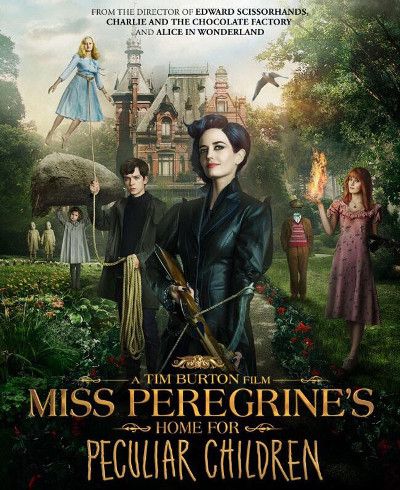
Miss Peregrine's Home for Peculiar Children (2016)


"When Jacob discovers clues to a mystery that stretches across time, he finds Miss Peregrine's Home for Peculiar Children. But the danger deepens after he gets to know the residents and learns about their special powers."

Really fucking good! I'm amazed at how much I enjoyed this, especially considering that it's a kids' film by Tim Burton.

Obviously, I only watched it because Eva Green is in it, and she does not disappoint. In fact, I don't think I've seen her give a bad performance in anything so far. She's not as sexy as she was in "Dark Shadows", "Sin City 2", or "300: Rise of an Empire", but then again, she's not playing that kind of role this time either.

Even though "Miss Peregrine's Home for Peculiar Children" is more or less a ripoff of Marvel's "X-men", it's beautifully filmed, almost flawlessly acted, and has lots of surprises in the casting. Samuel L. Jackson chews scenery brilliantly, Terence Stamp is used far too sparingly, but you can't complain when Rupert Everett is in it too!


As expected, the characters and plot (based on yet another YA novel which I have no intention of ever reading) are a bit weird here and there, and the CGI Slender Man/Jack Skellington-wannabe (a lot like the one in this year's "Blair Witch") makes several appearances (because that's the scary thing now, apparently), but it's not an excessive Tim Burton fantasy. In other words, there's no Johnny Depp or Helena Bonham Carter being overly "eccentric" to spoil it.

I'd even go so far as saying that "Miss Peregrine's Home for Peculiar Children" is an "epic" children's adventure. A few nods to (or obvious "borrowings" from) other well known classics for the same age group are noticeable without being cliché, and it all just works. Admittedly, a major part of the story involving "time loops" falls apart under closer scrutiny at the end, as happens with every "time loop" sci-fi or fantasy movie ever made, but the target audience are unlikely to notice.

Highly recommended for all ages, and definitely one to buy when it gets released on DVD and blu-ray. If it's still playing at a cinema near you, catch it while you can.

Oh, and [SPOILER] Judi Dench's character dies in it, which is always a bonus!

July 20, 2015

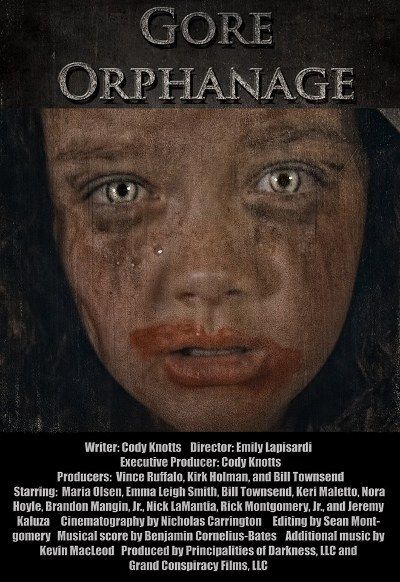
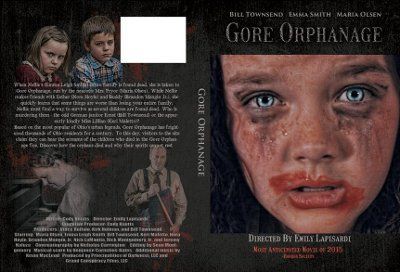
Gore Orphanage (2015)


"Set in the depression era, Gore Orphanage shows that some things are worse than losing your family."

Sharing the title and same urban legend with an earlier low-budget horror movie from 1980 which I've never seen, "Gore Orphanage" adds to one of Ohio's most famous (albeit extremely fanciful) ghost stories by successfully slipping the motivation of real life English murderer Mary Bell into the mix.

Obviously, being British myself, I wouldn't have ever known about the Gore Orphanage urban legend, but I did know about Mary Bell who was all over the news in the early 1980s and caused another kerfuffle during the Tony Blair era when the government failed to prevent her (as a convicted murderer) from profitting financially through sales of her published story.

Of course, if you don't know or care about any of those things, it doesn't really matter. "Gore Orphanage" is a work of fiction whether you choose to read Emily Lapisardi's "Gore Orphanage: The Novel" right now or wait a few months longer to watch this movie which Emily Lapisardi has directed and co-written (with producer/actor Cody Knotts) when it's officially released in October. I've been one of the lucky few reviewers who was selected to see the screener, and I mostly enjoyed it.


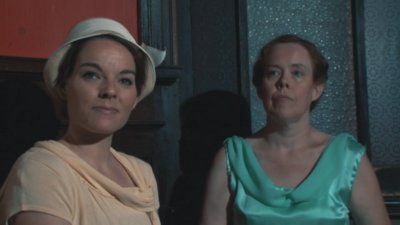
"Gore Orphanage" stars Maria Olsen as a sadistic proprietor of a privately owned orphanage in a role reminiscent of the latest incarnation of prison governor Joan "The Freak" Ferguson from the Australian "Wentworth" TV series. Mrs. Pryor (Maria Olsen) is a nasty piece of work with mental health issues which may excuse but not condone any legal justification for her actions. You'll hate her, but you're supposed to. As usual, Maria looks attractive in some scenes and appropriately horrible in others, but either way, she can certainly act.

As a foil to Maria Olsen's character, Keri Maletto plays the younger and nicer Miss Lillian who also shows similarities to an early Joan Bennett from "Wentworth". I'm not saying that there are any borrowings as such here, just stereotypical and easily recognisable genre characters. I may have noticed them in "Wentworth" (the rebooted "Prisoner: Cell Block H") most recently, but such characters have been part of every prison and orphanage drama.

I don't know why Miss Lillian never takes her hat off when she's indoors.

Sharing the burden of looking after the orphanage is Bill Townsend playing Ernst the German janitor/handyman. I won't spoil it for you, but things may or may not be as they first appear with Ernst. There's certainly some good work there with the script and characterisation. More screen time for Ernst would have been nice, but maybe a little more depth would have wrecked his subplot too.

Since this story is set in an orphanage, the rest of the cast is mostly comprised of child actors including Emma Smith, Nora Hoyle, and Brandon Mangin Jr. I believe that this is their first movie, so I'm not going to judge any of them too harshly. Some of their performances are better than others (and some made me cringe), but generally, they do an acceptable job. None of them are up to the same standard as kids in movies such as "The Bad Seed" (1956) or "Stephen King's It" (1990), but they're as good as any Children's Film Foundation actors from back in the day.

If I had to pick one child actor out of all of them who looks like she will have a big future ahead of her, it would be little Nora Hoyle who plays Esther. She has some great expressions, is aware of the other actors, and makes her scenes convincing. I simply wasn't very impressed by Emma Smith in the lead role as Nellie, but she does have her moments.

To be brutally honest, the camerawork and the direction doesn't work in the favour of many of the children. Wrong angles, some bad framing, and keeping them on their marks tends to show through. In particular, faults are most apparent when the children are speaking to each other and eye contact isn't made at the right angle, and there are unnatural movements when these young actors have to walk or run to a certain point.

Again, I also have to make some allowances because this is Emily Lapisardi's debut feature and she still needs to learn her craft. Giving credit where it's due, she's done a lot better than I could ever do, but that's a redundant point since I'm not a filmmaker and have no desire to ever be one. I'm just an often overly critical viewer.

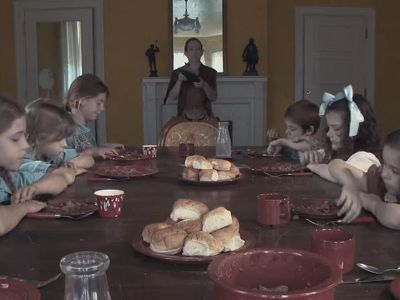
Mealtimes involve a lot of playing with food rather than eating it.

The cinematography by Nicholas Carrington is inconsistently but mostly competent. I prefer the scenes where he clearly used a tripod rather than the shaky handycam, but that's because I'm old-fashioned that way. The best of these is when Mrs. Pryor reads a passage from the Bible to the kids before they eat. Only in one scene near the end does the handycam accidentally make you think that you're watching a "killer's point-of-view", and this could possibly be stabilised more in post-production to remove that slight problem.

Editing is a laborious process for anyone, so I fully appreciate the effort which has gone into "Gore Orphanage", but even as a slow-burn murder/mystery/horror, it would benefit from being a bit tighter. The pacing is okay as it is, but... yeah, if I knew how to do it, I would swap a few scenes around and excise a couple of others. The soundtrack is also very basic and occasionally echoey as well. All these things are standard problems with low-budget productions, so you can take what I'm saying with the usual pinch or sackful of salt.

The 1930s depression era setting works well, and care has been taken with the various props, costumes, and location. "Gore Orphanage" is not quite as good in that respect as the movies which have inspired it, but it's noticeable that someone cared enough about attention to detail within the contraints of the budget.

Similar looking and themed movies such as "Flowers in the Attic" (1987), "The Others" (2001), "The Devil's Backbone" (2001), "House of Voices" (2004), "The Orphanage" (2007), "The Awakening" (2011), and ""The Secret pf Crickley Hall" (2012) do more or less the same thing, but "Gore Orphanage" doesn't have anywhere near the same budget as even the cheapest of those productions.

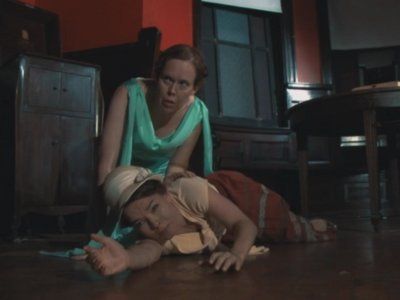
She still has that hat on!

One final (and very minor) gripe is that Chris "The Irate Gamer" Bores is listed in the credits but doesn't appear until after them. Apparently, he was in a cut scene which involved paranormal investigators. The only bit that remains is a post-credits bonus in which you only see him running away with three other people and have no idea who any of them are. Oh well, I guess that he won't be promoting this movie much on his YouTube channel now.

If you think from my critique so far that I hated a lot of this movie, you'd be wrong. In fact, I enjoyed the storytelling despite "Gore Orphanage" not being the supernatural or even bloody event which I initially thought that it was going to turn into. I truly enjoyed the acting, and I definitely got a kick out of the "twist" element. The wraparound scenes give that away more than I just have.

"Gore Orphanage" may not be brilliantly or slickly realised, and it's predictable for those of us who've seen too many movies, but it's generally okay. A little nod to "The Shining" doesn't become a cliché, and I totally respect and am grateful for the restraint shown there. I'm also grateful that no holds were barred when it came to the more taboo subject matter.

Having said that, I'm not entirely convinced that "Gore Orphanage" should be classed as a horror movie. It may be within the wider scope of the genre and contains a few slasher elements, but it's more of a drama and mystery than a "shit-yer-pants-scary" affair anyway.

For that reason, more than any other, I can only give "Gore Orphanage" a slightly below average rating as it stands at the moment. As much as I'm tempted to hypocritically gush about this movie and drop a marketing-friendly "quote" into my review to get a mention on the DVD sleeve, I just can't do it. "Gore Orphanage" isn't scary, and horror movies should be scary.


For more information about the DVD release, please check out the "Gore Orphanage" Facebook page: https://www.facebook.com/goreorphanagethemovie.

August 25, 2013

Should little kids be allowed to watch horror movies?

As someone who grew up with a totally uncensored TV and movie watching life, there's only one answer which I can give to this question without sounding like a hypocrite:

NO

For years, I used to think that I was very well balanced and not affected by anything I'd seen, heard, or read, but you know what? I have been, and not in good ways. With every day that passes, I get worse too.

Let me take you back to my childhood because it's the only one which I have any experience of. I'm not a parent (unless a couple of adopted cats count), and I don't know any children. I don't even like children. I never have done, not even when I was a child myself.

The first horror movie which I can remember watching on TV was "Satan's Triangle" (1975) although I didn't really understand it. It wasn't my first experience with horror or fear anyway, I just didn't like the "scary devil man" at the end of it. At the age of 3 or 4, I was absolutely terrified by the voices of the Mysterons on Gerry Anderson's "Captain Scarlet", and there was some weird bird-creature called Raggety on "Rupert the Bear" which gave me the screaming heebies! I didn't like those things at all and preferred to watch "Rainbow" and "Pipkins". I also used to really love cartoons. All the "Merry Melodies", "Looney Toons" and "Tom and Jerry" were my thing. If I watched live action TV, it was always nearly always "Laurel and Hardy" or "The Lone Ranger". I had "The Beano", "Whizzer and Chips" and all kinds of comics as reading material, and thus, I was pretty normal for a while.

I don't remember much about the years between being 5 and 7 except for going to Infant School, catching mumps, being read to, and listening to educational radio shows about mythology. TV shows which were popular then included "Batman" and "Star Trek" reruns, "Thunderbirds", "Planet of the Apes", "The Six Million Dollar Man", and various other American shows which were also family friendly. Never a Disney fan, the only Disney I ever used to watch was "Zorro" on Saturday mornings, and I didn't even know that it was made by Disney. My toys at the time were Lego, a small platoon of Action Man (G.I. Joe) figures, Dinky and Corgi cars, and stuff like that. I'd still say that I was quite normal. I wanted every toy advertised on TV (ah, those sneaky advertisers harnessing pester power!), but I don't think I was a bad kid. I had a cat, liked animals, really liked chickens, and was quite happy. Apart from having to see an eye specialist for a rare condition I have which makes my eyes extremely sensitive to light, which led to me having to wear dark-tinted glasses which got progressively lighter as I got older, I was just like everyone else. The fact that I could and can still see in the dark almost as well as a cat is neither here nor there.

In 1976, the year of "The Omen", some other things happened which changed me forever.

1976 is, as far as I know, the hottest recorded Summer that Britain ever suffered through. The word "drought" was on everyone's lips, "I'm a water saver!" stickers were given out at school for not flushing the toilet (something I still don't do very often!), and it was so hot that you could feel the pavement melting the bottom of your trainers as you walked. I was out in the sunshine every day, wearing my special NHS sunglasses, eating Golden Wonder cheese & onion crisps and "a quarter of" whichever sweets I wanted like a good 'un.

In the midst of this hot Summer, my parents and grandmother decided that we should have a caravanning holiday in Devon. Don't judge, this was a big thing in the '70s. And so we went off to a site near the seaside. I remember buying a comic. I don't know where, but either in Paignton or Torquay was where I found "Captain Atom". I couldn't tell you which issue it was, or much about the main story except for the ending. It's the ending which is the most important part.

In the "Captain Atom" comic which I read, the final frame showed the world being destroyed by the Sun "going supernova!". As a child who had never encountered death before, who still thought that Laurel and Hardy were alive, that the howling wind down the chimney was witches flying overhead, and that little people lived inside the radio, this "supernova" thing was a matter of much concern to me. I knew nothing about outer space, the Earth, or anything about anything really.

Also during this holiday, we went to Widecombe, which is famous for the story of "Widecombe Fair". You know the song, "with Uncle Tom Cobley an' all". I ended up with a booklet about it, and on the last page was a picture of the travellers as skeletons on a skeletal mare. It freaked me out! Big time! This was death in all its glory! This was our insides! This was nasty! It was almost as terrifying to me as a picture of a jack-in-the-box called "Top Knot" who could only be killed by cutting off his one lock of hair. I'd found the latter in a book of fairytales that my mum had one day, and regretted that too.

And then there were the pixies! Oh, Jesus! Pixies were everywhere in Devon, stealing children and eating them, or whatever they did! At least that's what all the postcards and menacing "Lucky Pixie" figures would have me believe! "Don't wander off or a pixie will get you!" was something that the local shopkeepers jovially said to any little kids who were silly enough to go into their tourist trap stores.

Feeling that the Earth was going to end any second, having seen what Death looked like, and now finding out that there were demonic pixies in the world was all too much. As the saying goes, I thought and thought until I thought a hole in the ground... or until I started to have what must have been some kind of undiagnosed nervous breakdown. I remember looking at all the shiny Play People (Playmobil now) figures in a toy shop and imagined them melting. Nothing felt safe anywhere anymore, and it got to the stage where I was in tears, scared to sleep, and was absolutely terrified that my parents were going to die. I had become very aware of death and mortality!

So what's this got to do with letting little kids watch horror movies? Nothing really, except that my own history shows how impressionable kids are. You have to be very careful what you let them see or hear. Reality and fiction are too hard for children to separate no matter what adults might think about their capabilities.

I was still in a very dark place after the Summer ended. I wasn't the happy, smiling little boy that I was before, and something about darker TV shows containing death drew me to them like a bee to a flower, or a fly to dogshit. Logically, you would think that I would have stayed away from such things, so I don't know why. I'm not a psychiatrist.

Maybe I should have had some kind of intervention, medical or otherwise at this point, but instead, my parents left me to watch any TV I wanted and to stay up until the TV stations closed down. Yes, this was before 24 hour TV. We had 3 channels and "closedown" was at 10.30pm most nights. Because of my eyesight "problem", I'd sit in pole position on a footstool about two feet away from the TV set, and I watched it all! The only dreams or nightmares I ever had were of the after closedown static.

I watched the programmes meant for "Schools and Colleges", daytime TV, dramas, soaps, magazine shows, movies, quizzes, game shows, panel shows, evening TV with more adult themes, and pretty much anything but "shouty kids" programmes or the news because it was boring. I was always looking for sinister, spooky stuff, and I found it too. There were so many things that I couldn't list them all, but I do know that ITV's "Beasts" was a favourite of mine, as was a similar series called "Thriller", and the BBC's "Supernatural" series horrified me during 1977! Just hearing Bach's Toccata and Fugue in D Minor being played at the beginning was enough! Many years later I learned how to play it on an organ, but that's another story. Suffice it to say that I hardly ever watched entertainment programmes which were designed for kids. I didn't like other children, and I had nothing in common with them. Children's TV and comedies made me cringe and feel nauseous.

By the time Roald Dahl's "Tales of the Unexpected" came along in 1979, I was a truly hardened horror TV fan and TV addict. I was also listening to a lot of radio plays, reading James Herbert novels—I'd never heard of Stephen King—while the other kids were reading books about Narnia. I still thought that I was normal, but the thing is, I wasn't normal anymore. I'd killed off my childhood, and was constantly sewing seeds of depression. As I started to specialise in horror, I was doing it to fuel those original fears about my own mortality. If there was anything spooky on TV, I had to see it. If there was a magazine or book about creepy stuff, I had to have it.

Unlike other kids, I didn't feel like I could be carefree or act like I was immortal, and I was constantly looking for answers for why I wasn't. Truth is, I still am. I did know that I was a lot cleverer than other kids because things came easy to me and teachers were always telling me so. I was also very destructive, I burnt ants with a magnifying glass, I shut flies in jars and boiled them to death, and I was that "quiet one" in the classroom who hardly said a word. I found it difficult to make friends with other kids as I changed schools from Junior School to Secondary School.

By the age of 11, I was bunking off school to go back home while my parents were at work to watch TV. For some reason—I still don't have an explanation for how it started—I was hitting my parents' booze cabinet pretty regularly. I'd mix a little drop of everything together just so it wouldn't be noticed. Bell's whisky, Gordon's gin, Lamb's rum, Bacardi, Stone's ginger wine, Cinzano, Advocaat, Babycham... I had a go at them all. And these drinks made me feel normal again. I was happier, exhilerated, but never drunk.

Nobody cared that I wasn't at school. Parents weren't fined for their offspring's truancy like they are now, and I'd forge notes as and when I needed to. To say that I was at home more than I was at school would be an understatement. The school was sometimes lucky to see me a couple of times a month! I hated Secondary School. I learnt nothing there except that I was shit at team games, but I still got out of it at 16 with 8 "0" levels.

So what about the horror films?

Here's where it gets tricky because I don't know which ones I watched first. I know that I watched a lot of Universal horror movies, everything by Hammer and Amicus, all the American horror TV movies, "Jaws", "The Amityville Horror", and of course, "Salem's Lot", but these were mostly at night. I also saw "The Collector" one afternoon, and it stands out as affecting me on a "that's not fair" level whereby, in my "innocence", I wanted Terence Stamp and Samantha Eggar to be together. I didn't realise that he was supposed to be mental and that he'd kidnapped her until many years later. There was an old movie one morning about a witch who has a lodger, which I've never been able to track down again, and that one really "shit-me-up"!

The thing is, I was only watching "TV friendly" horror at this point. The age of video recorders had yet to arrive, and the only movies I had seen at the cinema were "The Cat from Outer Space" (which was shit!), "Star Wars", and "Battlestar Galactica". Things like "The Texas Chainsaw Massacre", "The Hills Have Eyes", "Halloween", and even bigger classic titles were completely unknown to me. But as I said, by the age of 11, I was a self-medicating, depressive, truanting, little asshole.

To see why I don't think that kids should be allowed to watch horror movies or anything uncensored before their brains are ready for it, just imagine how much worse I would have been if I'd had access to the types of movies we have available today! Can you imagine what a child would make of "A Serbian Film" or "The Human Centipede"? Christ, if I'd seen those, I probably would have ended up acting them out and killing somebody!

During my time on the internet, I've often seen forum posts and blogs where people have bragged about the movies they watched as kids. It's especially true of Americans born in the late '70s and '80s who say that they were allowed to see "A Nightmare on Elm Street" and all the other slashers. Some boast about they even went into cinemas to watch them theatrically while legally underage.

The questions I always ask about this, is not only what psychological damage did seeing these movies do to the people who watched them, but why did they watch these movies in the first place? Do we all share the same sense of alienation and depression? People may say that the movies haven't affected them, but they're still watching horror movies in preference to any other today otherwise our paths would never have crossed. A lot of these people also collect weapons and own guns, not that there's any proven link between horror movies inciting violence, but statistics like that are always interesting. I know for a fact that there's something wrong with everyone who watches horror movies, especially me!

Nothing like "A Nightmare on Elm Street" or "Friday the 13th" was ever available to me. The cinema owner would have called the police if anyone under the required age had tried to see an "AA" or "X" movie, as they used to be known. My dad would have walloped the living shit out of me if I'd ever tried to do that too! The first horror movie I ever saw theatrically was "Dream Warriors", and that's so '80s that it barely counts as horror anyway. It's still not meant for little kids though!

"Horror Lamers", slasher fans, and the people who think of horror movies as comedies don't get it. They aren't real horror fans anyway nor do they understand the bigger implications. A lot of them are athiests with entitlement issues who think that they're immortal. They are all deluded, live happily in their "world of the invisible death", and would throw the contents of their stomach up several times over if they saw an accident in real life. If they saw a real dead body, they'd faint! Their grip of the difference between reality and fiction is even worse than a child's because they're in denial!

I was always more into the supernatural, especially supernatural movies where there was a religious presence. I wasn't brought up as a Christian apart from paying lip-service to being "Church of England" when asked, so my "religious education" and belief in the supernatural was formed through second-hand information from horror movies. Since I spent more time in front of horror movies than time at school, my whole moral system (or lack of one) is also based on horror movies.

Did I get into the occult like people think all horror fans do? Yes, too right I did, but not as a child. I collected all the paraphenalia and read all the books in my early 20s, and then realised that it was a crock of shit. I believed in ghosts, witches, and those bloody pixies before horror movies took over my life, and spooky books about folklore and legends were just extending my knowledge. The two things went hand-in-hand, but as far as I now know, witches and pixies aren't real. The jury is still out on ghosts. I believe in them, but I've never seen one. I don't believe in aliens though. Aliens are total bullshit!

People sometimes say things to me such as "You didn't turn out so bad!" and "Well, you're not a serial killer or anything!", but the reality is that, yes, I did turn out bad. I may have been to University, had lots of jobs and relationships, and I now live 4000 miles away from home, but I still suffer daily from depression, agoraphobia, vertigo, panic attacks, paranoia, and I really don't like people at all. The only things which definitely don't scare me are horror movies! After having Trigeminal Neuralgia—the worst pain known to man—for 2 years (8 years ago), I don't fear pain either. I don't like it much, but I don't fear it. Until you've ever repeatedly smashed your head against the wall because it's less painful than the pain inside your head, you don't know what pain is!

I've seen lots of dead bodies—too many—seen things done to people which would turn any sane person mad, and I've done some of the most heartless and cruel things to other people in my past which you would not believe! I've done even worse to myself. I'm bitter, have no feeling or compassion for anyone, and I'm almost a recluse! If it wasn't for the guilt which sometimes sneaks up on me like a ghost, I'd think I was a psychopath! I'm completely in contrast to my parents who were social, normal people who never watched a single horror movie in their lives. Actually, I think my mum may have seen "Ghoulies" when I had it on VHS, but nothing else.

Was I biologically determined to be a horror fan or to be this desensitised creature that now exists only for more horror movies and the internet? Or did watching horror turn me into something which I shouldn't have been? Dunno. Children have different ways of processing things, but without question, everybody who has been regularly exposed to horror movies is hardened to the violence and the scares. I say "exposed to" when I really mean "enjoyed watching", but you know it's true. I'm a very bad human being because of watching horror movies.

Still think it's a good idea to let little kids watch horror movies? I don't.

I often wish that I'd never seen a horror movie in my life and that I was still the happy little boy inside that I was 40 years ago, but horror messed me up. I can't turn back time.

December 11, 2012

Ghost Stories for Christmas - Part 11

The Amazing Mr. Blunden (1972)


"A mysterious, very old solicitor Mr. Blunden visits Mrs. Allen and her young children in her squalid, tiny Camden Town flat and makes her an offer she cannot refuse."

Based on the "The Ghosts" by Antonia Barber, "The Amazing Mr. Blunden" is another classic British movie for the Christmas season.

This is the last one of these that I'm going to post since you all hate free movies so much. Bah, humbug!

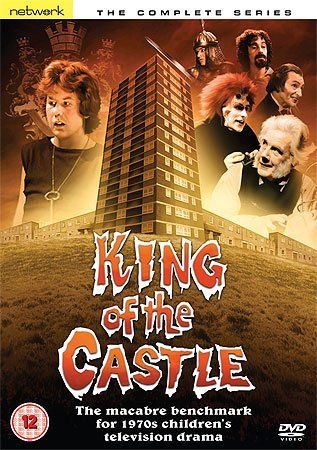
King of the Castle (1977)


There are some TV programmes from my childhood which I thought I'd only imagined even though I fondly remembered important parts of them. On the other hand, there are quite a few which I wish really did only exist in my imagination because watching them as an adult makes me cringe. HTV's "King of the Castle" has a foot in both camps because, having spent a few hours today rewatching it, it's not something that I ever want to see again.

If you've never heard of "King of the Castle", here's the blurb from Amazon:
Macabre, fantastical and a benchmark production for children's television in the 1970s, King of the Castle was created by Doctor Who stalwarts Bob Baker and Dave Martin as one of the run of outstanding children's dramas HTV produced in that decade. Featuring strong direction and a script which expertly melds fantasy and reality, the series boasts solid performances from genre stalwarts Fulton Mackay, Milton Johns and Talfryn Thomas as well as Philip Da Costa as the series' hero, Roland. One of the most memorable television series of the '70s is available here, for the very first time in any video format. Episode three no longer exists in the archive in any format and the version included on this set is taken from an off-air VHS.
I'm not sure what I was looking for on YouTube when I discovered that the whole "King of the Castle' series had been uploaded by several people, but I was in one of those moods where I randomly click on the recommended videos until I end up watching some very strange channels indeed. Before I found "King of the Castle", I'd been watching highly embarrassing episodes of "Grange Hill", "Chocky" and "The Tomorrow People" and feeling dirty about doing so. If there's anyone of a similar age to me who didn't see at least one of those when they were originally shown then they probably didn't have a television.

Since I didn't recognise the title of "King of the Castle", all I remembered from the series to identify it was that the kid who got beaten up by bullies had a model kit of Frankenstein's monster, and somehow he ended up in a dungeon ruled by some ratty-looking guy who told him to always go up if he wanted to escape. What I'd forgotten was how the story was filled with clever socio-political subtext and commentary which I'm ashamed to say that I still don't quite understand even as an adult.

The big messages of the fantasy part of "King of the Castle" are apparently that work is pointless, comfort and ignorance is bliss, and there's too much bureaucracy in the world. There's a lot of Oedipal stuff going on too whereby the hero, Roland, has to take his father's role by force and has a crush of some kind on his stepmother. The latter doesn't surprise me in the slightest since Angela Richards, who plays the dual role of June and the Lady, is absolutely gorgeous.


Very recognisable faces include Fulton Mackay (the prison officer from "Porridge") as a Frankenstein-style scientist, Milton Johns as his monster, creepy Talfryn Thomas as the ratty-looking caretaker, and Jamie Foreman (who now plays Derek Branning in "Eastenders") as Ripper the bully. Bizarrely, I didn't recognise the lead, Philip Da Costa, as being the same guy who went on to play Jackson in "Scum" (1979).

In spite of the badly-timed, obviously stagey acting, and cheap sets which look better than the cardboard and curtains that they are really made of, "King of the Castle" isn't a bad piece of kids' entertainment for the time. Unfortunately, as a grown-up, I can see that it's really just a slightly darker, and very British, rip-off of "The Wizard of Oz" with the genders of the protagonists changed. Both nostos stories go back to Homer's "The Odyssey" anyway, but let's not get too highbrow about them.

One thing which really irritated me, perhaps because I've been away from Britain for so long, was the choirboy singing the "I'm the king of the castle, and you're a dirty rascal" theme tune which is full of the mispronounced "Estuary English" which I despise. It sounds like "I'm the king of the CARsul, and you're a dirty RARscul". Ugh. I hate that and "BARth" instead of "bath", "GLARss" instead of "glass", and the "someFINK" instead of "something" which even Gordon Ramsay has fallen prey too. I've always noticed it, but maybe it doesn't show up so much when you are constantly surrounded by it or you're a bit thick.

I don't recommend "King of the Castle" although I've embedded it as a playlist at the top of this post. It's not an accurate reflection of life in Britain in the late 1970s or anything, and it's certainly not scary for anyone over 7 years old. If you are into nostalgia, it's interesting to see a "Hammer Horror" magazine and a "Howard the Duck" comic at one point, but that's about it really.

Isn't it funny what you can find on YouTube when you are looking for something else? If only I could remember the name of that weird poltergeist story with a load of cushions flying around a room which I caught the last five minutes of. Whatever it was that left the image of someone tied to a chair with a washing line and a bottle of Sarson's malt vinegar stuck in their mouth is another matter.

December 9, 2012

Ghost Stories for Christmas - Part 9

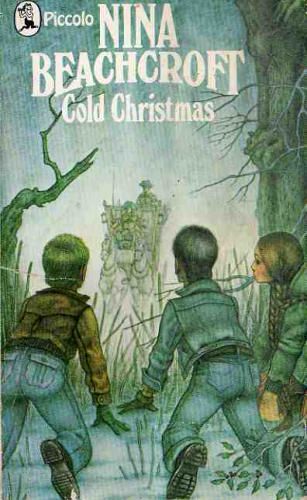
Cold Christmas by Nina Beachcroft (1974)


Yes, it's a kids' book rather than a film, but "Cold Christmas" is one of the few books which I read when I was in the intended age range for it. As someone who was reading James Herbert instead of the patronising and unrealistic "approved" books in English lessons when the teacher wanted some peace and quiet, I still think that "Cold Christmas" is one of the best of its kind.

"Cold Christmas" is out of print, but there are plenty of copies available to buy from eBay and Amazon. I got mine from a church jumble sale back in the early '80s. I don't have it now as I passed it on to another jumble sale along with all my other paperbacks in the early 2000s. "Cold Christmas" is not a rare book by any stretch of the imagination although I can't tell you how many times it has been reprinted. I had the Piccolo version as in the picture above which I know didn't have the original cover art.

I don't understand why nobody ever thought of adapting "Cold Christmas" into a TV miniseries or a film except that maybe it would have turned out to be too much like "The Amazing Mr. Blunden" (1972) or "The Watcher in the Woods" (1980). Nowadays, with filmmakers cloning every other success, this wouldn't even be an issue.

"Cold Christmas" isn't really like "The Amazing Mr. Blunden" or "The Watcher in the Woods" though. It doesn't have quite the same childish vibe to it. Give or take some of the dialogue, if it's similar to anything then it's a lot like Robert Westall's books in the way it handles the perspective of a lonely child caught up in a more adult situation than the child realises. The closest thing to it that I can think of would be Robert Westall's "The Scarecrows" (1981) which was, of course, written later and meant for slightly older readers, but there are superficial similarities to a lot of Enid Blyton's stories, Barbara Sleigh's "Jessamy" (1967), Penelope Farmer's "Charlotte Sometimes" (1969), Antonia Barber's "The Ghosts" (1969), and even Philippa Pearce's "Tom's Midnight Garden" (1958). Most children's fantasy books are in the same vein, but "Cold Christmas" feels a little bit more modern.

So what's it about? Basically, due to changes in her family circumstances (i.e. remarriage), a neglected little girl named Josephine spends Christmas in a large Georgian mansion, and discovers that the mansion is haunted. Just like every other children's ghost story, it features an alienated lead character and the "Cassandra" trope as what Josephine sees isn't believed by the grown-ups until the very end.

Apparently, Nine Beachcroft saw a house in a Hertfordshire village called "Cold Christmas" and was inspired to write a story about it. The real house has no such legend, but it's described so well that the you can really imagine the place existing and having a ghostly mystery to solve.

The atmosphere is very sad, and the whole family situation is very "upper working class" or even "lower middle class", but that's hardly a hindrance to a child's imagination. I'd hazard a guess that the book was intended for girls, but that doesn't matter so much either. How many boys have read "Twilight" or "The Hunger Games" in recent years? Gender specific books don't seem to phase anyone who wants to read something. Hell, I used to read "Misty" comic along with my weekly "2000 A.D." because the girls' comicbook was the only thing with horror stories in it at the time.

It's a pulp children's novel for sure, but if you've never read "Cold Christmas", I recommend that you do so. It's one of the great Christmas ghost stories no matter what your age is.

Here's the Amazon link: Cold Christmas: A Ghost Story

October 19, 2012

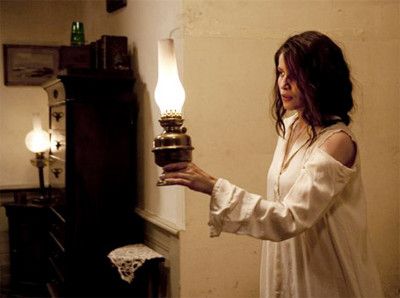
Behind the Walls 3D (2011)

(AKA "Derrière les murs")


"In 1922, a young novelist goes to the countryside to write her latest book and falls victim to terrifying hallucinations and nightmares."

With everyone else frantically writing about "Paranormal Activity 4" today, I thought I'd provide an alternative in the form of "Behind the Walls 3D". It's not that I recommend it over "Paranormal Activity 4" in any way, but I've waited a long time to say something about it, and it seems appropriate for my "Hallowe'en Countdown".

Let me just forewarn you that I generally love French horror movies. I usually don't care how bad they are or how much of their stories make absolutely no sense. Having said that, I really don't have anything good to tell you about "Behind the Walls" because I barely had the patience to sit through it. "Behind the Walls" is, without doubt, one of the most boring movie experiences ever unleashed upon the unsuspecting public.

The warning signs were there before I even started watching the DVD. Just about any movie which is directed and written by the same people tends to be a low-budget abomination, and adding 3D on top of that almost always guarantees a turd. I hoped it wouldn't be so, but I was proven right on both counts. In spite of "Behind the Walls" being the first French live-action feature shot in 3D, the sparse 3D moments add very little to a story which is handled so ineptly that it almost makes no sense at all.

From the promotional blurb and French websites, I mistakenly believed that "Behind the Walls" was going to be a period version of "Half Light" but with an even more attractive actress in. Superficially, "Behind the Walls" and "Half Light" both deal with the loss of an author's child and that same author retreating into an isolated place to write her next novel. That's where the similarities end.

"Behind the Walls" isn't really a ghost story or a thriller except that it has elements of both which are used as confusing red herrings. The unfurling drama is mainly about our author, Suzanne (Laetitia Casta), mixing drugs into her drinks and getting crazier while the local villagers blame her for all their troubles. When a couple of their daughters disappear, it reminds them of the last outsider who came to live in the area and a series of unsolved child murders. It sounds a lot like "The Reflecting Skin" too, doesn't it? Trust me, it isn't.


The only reason to watch "Behind the Walls" is to ogle Laetitia Casta. She was a Victoria's Secret model before becoming an actress, but you can't really hold that against her. She can actually act a bit although she's a bit dour-looking and far from perfect. Depending on the angle she's filmed from, she's also reminiscent of several Hollywood actresses whose names I can't quite remember. In other words, she's a "type" rather than a star.

The French are such great copyists, and they know what sells. Even Laetitia's love interest in "Behind the Walls" is an "Antonio Banderas type" by the name of Thierry Neuvic. Again, he's not a bad actor, but you won't see him outside of French cinema or TV either.

You might as well give up on the plot since all the good stuff involving an underground lair which Suzanne's cat, Zola, accidentally discovers is quite unimportant except in how it highlights the state of our heroine's mind. When Suzanne moves her typewriter to that spooky place to write her Lovecraftian novel, of course, it's very creepy and full of supernatural shenanigans, but it's all in her head.

Everything is about coincidences, people jumping to conclusions with the minimum of circumstantial evidence, and ignoring what is right in front of them. That is except for the local pervert/mid-life crisis guy who becomes dangerously obsessed with Suzanne, and, of course, her Antonio Banderas lookalike boyfriend who gives her a gratuitous diddling before setting off to play detective in another village.


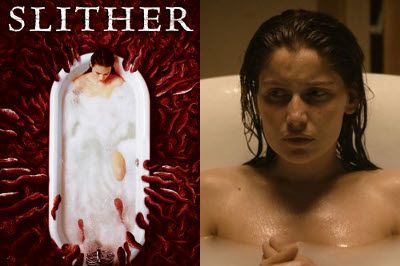
One scene which reeks of plagiarism (however unlikely it may be) is when Suzanne is in a bathtub surrounded by rats. Although the old porcelain bathtub reminded me of the posters for "Slither", Teeth" and "What Lies Beneath", the scene obviously owed most to the first of these and simply swapped alien bugs for a horde of rodents.

Without spoiling the ending for you (as if you'll ever be silly enough to watch this anyway), let me just say that my overwhelming thought when the credits came up was, "What the bloody Hell did I just watch?" I've tried to put it together for the purpose of this review, but I may be completely wrong about what the directors, Julien Lacombe and Pascal Sid, were trying to achieve.

"Behind the Walls" has some beautiful locations, is nicely filmed, the sparseness of the setting works in its favour, and the costumes are spot-on, but it lacks a cohesive and involving story. It's not a traditional ghost story, and it may have a deeper meaning about French national guilt or some such tripe which is way above my head, but it's just as likely to be only a badly made movie.

March 6, 2011

The Children (2008)


"A relaxing Christmas vacation turns into a terrifying fight for survival as the children begin to turn on their parents."

There are many good reasons why I never want to have children apart from the obvious physical impossibilities of trying to squeeze a baby out of any of my male orifices but this film is yet another one. It's not that "The Children" was in any way scary but the annoying screeching of all the kids involved just made me want to switch it off. That was before any of them turned evil too.

I'd really been looking forward to seeing some British horror again and, as you can imagine, I was hoping that this would be the best thing that I'd ever seen so that I could rave about it for months to come and irritate everybody. Unfortunately, "The Children" was a very, very poor "evil kids" film. The children weren't all that sinister and pretty much sucked at acting even given that they are all obviously too young to know any better anyway.

I'm not sure whether it was just the acting or if it was how I just couldn't identify with any of the seemingly middle class parents which made me not care about any of them. It's a given that I wouldn't care about the children anyway but you'd think that I maybe would have felt something for the sexy Casey played by Hannah Tointon (Simon's girlfriend in "The Inbetweeners" and real-life younger sister of Kara who plays Dawn in "Eastenders"). I just wanted everyone in the film to die as quickly and as brutally as possible. Adults and children, I didn't care which went first.

After a really slow and irritating start which told me more about the annoying personalities of the two families involved than I even wanted to know, there were a couple of brutal "accidents" caused by the children with most of the gore occurring off screen. I can forgive the filmmakers a bit because of the obvious lack of budget but if you are going to have someone sledge down a hill straight into a pitchfork then I want to see it happen and not just see the aftermath no matter how good the practical latex and corn syrup effects are.

Everything else consisted of various kinds of slicings and stabbings. I can't really fault the technical aspects involved as the production values were pretty good but things moved far too quickly for there to be any tension or atmosphere whatsoever. Back to the acting, all the adults looked anxious or constipated while the children just stared without blinking and seemed to be laughably gormless in the process.

With every minute, things just got more frantic and incredible until the denouement ruined it all completely. Basically, you can easily predict who will survive and why. Then, after the fact, wonder why you even bothered to watch this film in the first place. There were no lessons to be learned here and it was certainly no moral fable.

SPOILER (Highlight to read)

The fact that the children were simply the first to succumb to some kind of virus that turned them into evil killers pretty much spoiled everything that had gone on before. I was expecting another "Village of the Damned" and instead all I got was an even more inferior version of "The Crazies".

END OF SPOILER

Very rarely do I ever watch the so-called "Special Features" on DVDs but, due to not being in any way entertained by "The Children" itself, I watched the "Making of" documentary. Apart from being very shoddily put together, there were a few interesting insights into how the various stunts and effects were achieved but there wasn't anything particularly useful or memorable there either. It's sad that I actually still enjoyed "The Making of The Children" more than the main feature.

Anyway, that's another one that I don't recommend to anyone unless they have already started a collection of coasters made from these dreadful "Ghost House" releases.