"A servant in the house of Wuthering Heights tells a traveller the unfortunate tale of lovers Cathy and Heathcliff."
It's very tempting to blog about "Wuthering Heights" simply to hit back at the "Jack-of-all-trades and master-of-none" movie reviewers who've tried to invade the horror genre (as they have done with various degrees of success over the last five years), and play them at their own game by intentionally reviewing some of their movies less than favourably, but I'm not going to stoop to their extremely low level by writing off this classic movie as nothing more than a great wraparound ghost story ruined by a load of soppy romantic drivel meant for repressed Victorian girls in the middle.
Somewhere amongst my disapproval of the faux "journalists" who've tried their hardest to destroy what little camaraderie was left in the various horror "communities" (which has resulted in hardly any true horror movies being made now), plus my added dislike of the confusing old books I was forced to read at school, the part of me which can still discern the good found a thoroughly engrossing gem in this adaptation of "Wuthering Heights".
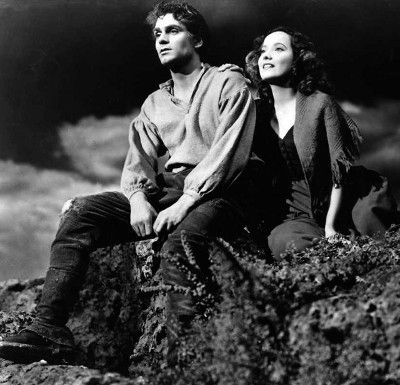
To cut a long story short, I never finished reading "Wuthering Heights" when I was doing my English Literature A levels. The alien setting of the bleak Yorkshire moors, the ever increasing number of inconsistent characters, and the over-complicated style of this sprawling soap opera were even worse to me than reading some middle-English tripe such as Chaucer or the more nebulous poems of Samuel Taylor Coleridge. Once given the opportunity to learn about a more straightforward book for the exams, I jumped at the chance by devouring "Pride and Prejudice" instead. I vowed never to read "Wuthering Heights" again (I've kept the promise to myself easily), and I had no interest in ever watching the movie until I started investgating the work of wartime directors as a possible theme for this month's "Hallowe'en Countdown".
What a delight awaited me when I discovered that this "Wuthering Heights" is an abridged version of only the best parts of Emily Brontë's tedious novel! The whole second generation of Earnshaws and Lintons (and God knows who else because that's where I threw the book in the bin) are absent, yet the tragic themes remain the same. Catherine's social climbing still wrecks her love affair with Heathcliff, Heathcliff is still a vengeful savage at heart, and the other characters are all moral weaklings trapped by their various finances, hereditary status, and genders in the class system.
As movies go, director William Wyler obviously did a fantastic job with this Samuel Goldwyn production, albeit with some disagreement about the ending. Behind the scenes, Wyler managed to beat most of the ham out of Laurence Olivier and even contain the disputes with Merle Oberon, although the surprising lack of physical chemistry between the leads is still noticeable until Cathy is on her deathbed.
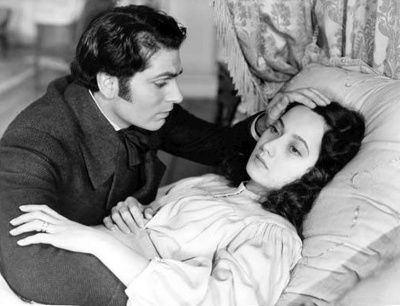
It's almost possible to feel some sympathy for "milksop" Edgar Linton and his sister Isabella, due to the respective charisma of David Niven and frailty of Geraldine Fitzgerald. rather than wanting them to die horribly from the moment they first appear. Their very American period clothing is a little jarring for anyone seeking historical accuracy where there won't be any, but that's a minor quibble.
Even Flora Robson, known best to horror genre fans as Aunt Agatha from "The Shuttered Room" (1967), and possibly the lesser seen "Eye of the Devil" (1966) starring David Niven once again, comes across as far more human and defeated as the long-suffering housekeeper and narrator Ellen (or Nelly) Dean. Out of all the characters, she's likely to be more remembered than Laurence Olivier trying to pass for a Gypsy with highlights of Kiwi brown boot polish on his face.
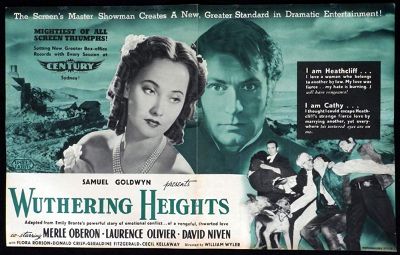
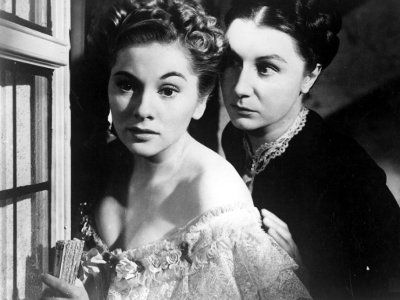
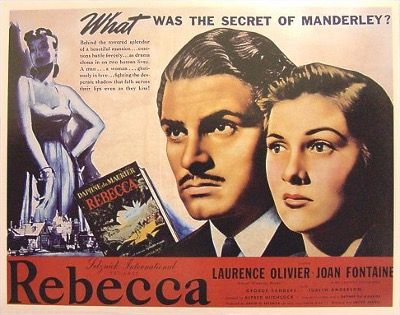
Albeit a product of 1939 with affected speech patterns and stagey line delivery, "Wuthering Heights" is considerably more even in quality than Alfred Hitchcock's "Rebecca" (1940), and you won't find yourself cringing. After a few minutes, Greg Toland's Academy Award winning cinematography will make you forget that this is all in black and white too.
"Wuthering Heights" is a dark, brooding story with dark, brooding, and mostly unlikeable characters in its original form as a book, but with over half of it gone, the core works well as a tragic romance. It's not the same thing as reading the book, so you can't just watch the film instead of studying if you are unlucky enough to have it on your syllabus, but the subject matter has been rendered into an easily digestible work of art which is far more enjoyable than it really should be.
Thus, we have another movie for October which isn't something a "horror fan" would normally think of watching. Sometimes you just have to take a chance on something outside of your comfort zone, because life is too short to watch shit movies.